
These are the questions we answer most often while standing in a wet lounge at 2am. Short, honest answers — no scare tactics.
1. How fast do I need to act?
Within hours, not days. Clean water becomes a bacteria problem within 24–48 hours, and mould can establish in that same window. Shut off the source, then start extraction the same day. Our first-24-hours checklist walks through it step by step.
2. Will insurance cover it?
Sudden, accidental water damage — a burst pipe, a failed hose — is usually covered by NZ house policies. Gradual leaks usually are not. Photograph everything before anything is moved, and read our guide to documenting a flood claim. For natural flood events, cover can also involve the Natural Hazards Commission.
3. Can the carpet be saved?
Often yes, if the water was clean and extraction starts quickly. The deciding factors are water category, time wet, and fibre type — explained in can water-damaged carpet be saved?
4. Does the underlay have to be replaced?
Frequently, yes. Underlay is a sponge: it holds water against the floor long after the carpet surface feels dry. We measure it with a moisture probe and tell you honestly — replacing underlay is far cheaper than replacing carpet and repairing a swollen floor.
5. How long does proper drying take?
With air movers and dehumidifiers, usually 2–4 days, confirmed by moisture readings rather than by touch. Carpet that "feels dry" on top can still be wet underneath — that is how hidden mould starts.
6. Can I just hire a dehumidifier and do it myself?
For a small splash on a hard floor, yes. For soaked carpet, a hire unit removes water from the air, not from the underlay. Without extraction first, you are drying the room while the floor stays wet.
7. When does mould start, and where?
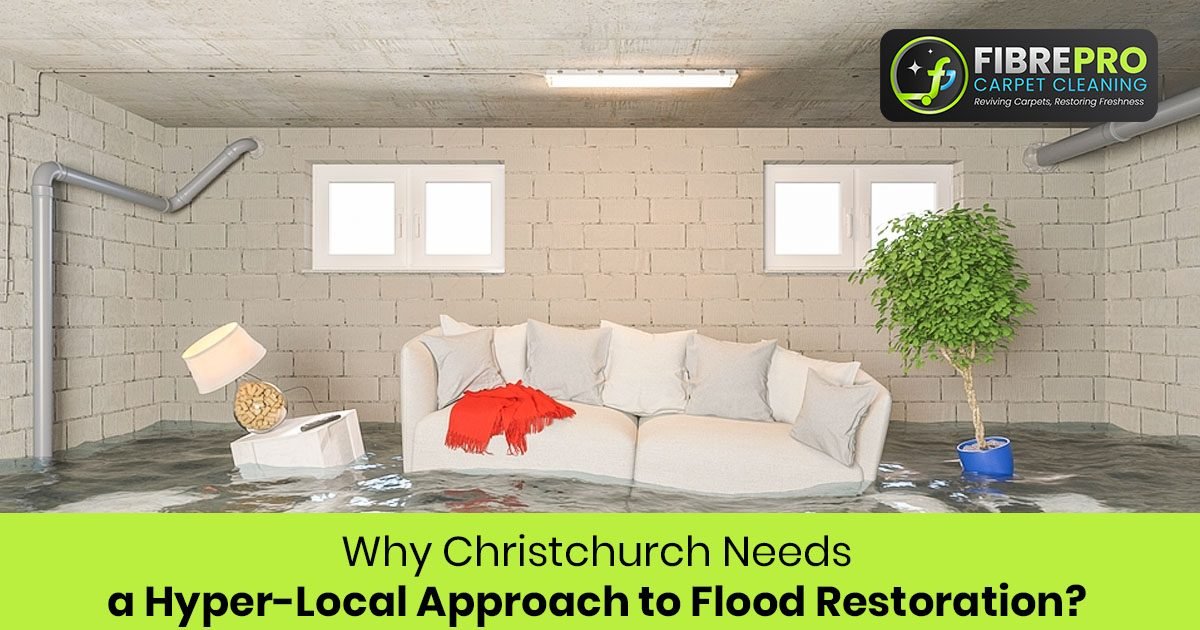
From about 24–48 hours, and the danger spots are the ones you cannot see: under the carpet, inside wall cavities, behind skirting boards. Low-lying, high-water-table areas like Bexley, South New Brighton and Brooklands dry slowly in winter, which shortens the safe window.
8. Is flood water dangerous?
Depends on the source. Clean supply water is category 1. Washing machine or dishwasher water carries detergents and bacteria. Anything from outside — stormwater, river, sewage — is category 3: keep children and pets away and treat it as contaminated.
9. What does flood restoration cost?
It varies with how much water, how far it spread and how long it sat, which is why we assess before quoting. If it is an insured event, restoration costs are usually part of the claim — our moisture records and photos support it.
10. Who do I call first — plumber or restorer?
If water is still flowing: plumber first (or your toby/stop tap), restorer second. If the water has stopped: restoration team first, because every hour of standing water does more damage. Burst pipes hide too — see the early warning signs of hidden leaks.